





- By Admin
- 28 Apr, 2026
10 Signs Your Child Is Ready for Kindergarten
Starting kindergarten is a big milestone. For parents, it often brings a mix of excitement and concern. The most common question is simple.
Is my child really ready?
Many parents rely only on the age for LKG India to make this decision. But readiness is not just about age. It is about how your child feels, behaves, and adapts to a new environment.
Understanding the right kindergarten readiness signs can help you make this decision with confidence, without rushing your child or holding them back unnecessarily.
At places like Happy Feet, this readiness is not assumed. It is carefully nurtured, step by step, through everyday learning experiences.
What Kindergarten Readiness Really Means
Kindergarten readiness is not about how much your child knows. It is about how prepared they are to learn.
A ready child can:
- Stay away from parents for a few hours
- Follow simple instructions
- Express basic needs
- Interact with other children
- Show curiosity towards learning
These are the real kindergarten readiness signs that matter more than early academics.
At Happy Feet, these skills are developed through play, interaction, and a safe environment that helps children feel comfortable from the very beginning.
Understanding the Right Age for LKG in India
The typical age for LKG India falls between 3.5 to 4.5 years.
But here is what many parents miss. Two children of the same age can have completely different levels of readiness.
This is why schools like Happy Feet focus less on pushing children based on age and more on observing their comfort, confidence, and development.
Because when a child feels ready, learning becomes natural.
10 Kindergarten Readiness Signs Every Parent Should Know
Let’s break down the most important kindergarten readiness signs.
1. Your Child Can Stay Away from You Comfortably
Separation anxiety is normal. But if your child can stay away for a few hours without distress, it is a strong sign of readiness.
At Happy Feet, children are gently introduced to this transition, making the shift feel safe and gradual.
2. They Can Communicate Basic Needs
Your child does not need perfect speech. But they should be able to:
-
Ask for help
-
Express hunger or discomfort
-
Respond to simple questions
Strong communication is a key part of any school readiness checklist, and it is something children naturally build at Happy Feet through daily interaction.
3. They Follow Simple Instructions
Classroom learning depends on listening and following directions.
If your child can understand and act on simple instructions, it is one of the essential kindergarten readiness signs.
Structured activities at Happy Feet help children develop this habit without pressure.
4. They Show Curiosity Towards Learning
Curiosity is the starting point of all learning.
If your child:
-
Asks questions
-
Shows interest in stories
-
Wants to explore new things
Then they are already showing strong kindergarten readiness signs.
At Happy Feet, this curiosity is encouraged, not controlled.
5. They Can Focus for Short Periods
Children are not expected to sit for long hours. But they should be able to:
-
Stay engaged for a few minutes
-
Complete simple activities
This ability is gradually developed through fun and engaging tasks at Happy Feet.
6. They Enjoy Being Around Other Children
Social comfort is a major part of readiness.
If your child:
-
Plays with others
-
Shares toys
-
Participates in group activities
It shows they are ready for a classroom setting.
Group learning at Happy Feet helps children build these social skills naturally.
7. Basic Self-Care Skills Are Developing
Independence starts small.
Children should begin to:
-
Eat on their own
-
Wash hands
-
Manage simple tasks
These are important points in any school readiness checklist, and they are part of everyday learning at Happy Feet.
8. They Can Handle Small Routine Changes
School introduces structure.
If your child can adjust to small changes in routine without major distress, it shows emotional readiness.
At Happy Feet, structured yet flexible routines help children adapt comfortably.
9. They Show Early Learning Interest
Children do not need to master academics before kindergarten. But some exposure helps.
Look for:
-
Recognition of colors or shapes
-
Interest in rhymes
-
Basic familiarity with numbers or letters
These are early child development milestones that are gently introduced at Happy Feet through play-based learning.
10. They Feel Confident in New Environments
Confidence is one of the strongest kindergarten readiness signs.
If your child:
-
Explores new spaces
-
Interacts with new people
-
Shows curiosity instead of fear
It indicates they are ready.
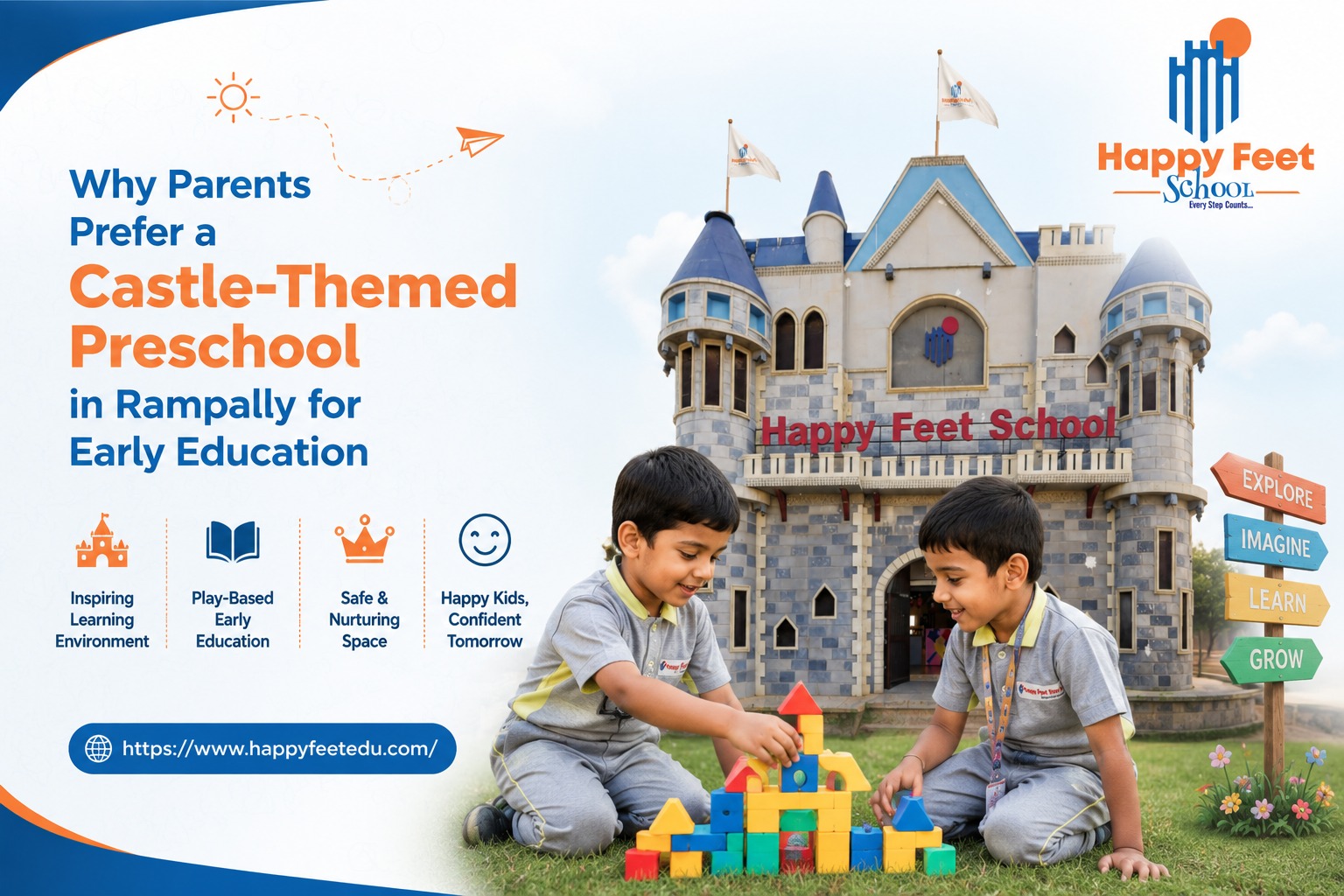
The welcoming, castle-themed environment at Happy Feet plays a big role in building this confidence from day one.
Why Readiness Matters More Than Early Academics
Many parents worry about whether their child knows enough before kindergarten.
But here is the truth.
Children who are emotionally ready perform better than children who are academically pushed too early.
Focusing on real kindergarten readiness signs ensures:
-
Better adaptation to school
-
Stronger confidence
-
More interest in learning
At Happy Feet, the focus is always on building this readiness first, before academics.
The Role of Preschool in Kindergarten Readiness
A good preschool acts as a bridge between home and school.
It helps children:
-
Understand routines
-
Build communication skills
-
Develop social comfort
-
Gain confidence
At Happy Feet, this transition is designed to feel natural, not overwhelming.
Children move from Nursery to PP1 and PP2 in a way that gradually prepares them for kindergarten.
How Happy Feet Makes This Transition Easier
What makes Happy Feet different is its focus on emotional comfort.
Children are not forced into structure. They are guided into it.
The environment encourages:
-
Exploration
-
Expression
-
Interaction
The castle-themed space at Happy Feet is not just about design. It helps children associate school with excitement rather than fear.
This emotional connection is what makes children open up, participate, and learn better.
How Parents Can Support Readiness at Home
Parents play a big role in preparing children.
You can support your child by:
-
Talking and listening regularly
-
Creating simple daily routines
-
Encouraging independence
-
Reading stories together
-
Allowing free play
When this support at home is combined with the right environment at Happy Feet, children naturally develop the required child development milestones.
Common Mistakes Parents Should Avoid
While preparing your child, avoid:
-
Comparing your child with others
-
Forcing early academics
-
Ignoring emotional readiness
-
Rushing admission decisions
Every child is different. Readiness should be based on growth, not pressure.
When It Is Okay to Wait
If your child:
-
Shows strong separation anxiety
-
Struggles with communication
-
Finds it difficult to adapt
It is okay to wait.
At Happy Feet, the focus is always on ensuring the child is comfortable before moving to the next stage.
Final Thoughts
Kindergarten is not just another class. It is the beginning of your child’s learning journey.
Understanding the right kindergarten readiness signs helps you make a decision that supports your child’s confidence and happiness.
A strong school readiness checklist goes beyond academics. It includes emotional, social, and cognitive readiness.
At Happy Feet, the goal is simple.
To make sure every child steps into kindergarten with confidence, curiosity, and a genuine love for learning.
Because when a child feels ready, everything else follows naturally.
Contact us for more information about the project.