





- By Admin
- 24 Apr, 2026
How Early Childhood Education Shapes Long-Term Academic Success
When parents think about their child’s future, they often picture milestones like good grades, strong communication skills, and confidence in school. What many do not realize is that the foundation for all of this is built much earlier than expected.
The early years of a child’s life are not just about play or basic learning. They are a period of rapid brain development, emotional growth, and social understanding. This is where early childhood education benefits become most visible. The experiences a child has during these formative years can shape how they think, learn, and interact for the rest of their academic journey.
In India, awareness around early learning has grown significantly. Parents are now looking beyond traditional schooling and focusing on environments that nurture curiosity, creativity, and emotional well-being. Understanding the importance of preschool and how it influences long-term success can help parents make more informed decisions.
Why the Early Years Matter More Than You Think
A child’s brain develops at an incredible pace during the first five years. Research shows that nearly 90 percent of brain development happens before the age of five. This means that the quality of experiences during this phase directly impacts cognitive development in children.
During these early years, children are not just learning alphabets or numbers. They are learning how to:
-
Process information
-
Solve simple problems
-
Express emotions
-
Build relationships
-
Understand the world around them
These foundational skills form the base for future academic learning. Without this base, even the best schooling later may not be as effective.
This is where early childhood education benefits become crucial. A well-designed preschool environment ensures that children are exposed to structured play, guided learning, and meaningful interactions.
The Role of Preschool in Building Academic Foundations
The importance of preschool goes far beyond preparing children for primary school. It sets the tone for how a child approaches learning.
1. Language and Communication Skills
Children in a preschool environment are constantly exposed to conversations, storytelling, and interactive activities. This helps them develop vocabulary, sentence formation, and listening skills. Strong communication abilities make it easier for children to understand lessons and express themselves confidently in school.
2. Early Literacy and Numeracy
Preschools introduce basic concepts like letters, sounds, shapes, and numbers in a playful way. Instead of rote learning, children learn through songs, games, and activities. This builds familiarity and reduces fear when they encounter formal education later.
3. Focus and Attention Span
Structured routines in preschool help children learn to focus on tasks, follow instructions, and complete activities. These habits are essential for academic success as they directly influence classroom behavior and learning efficiency.
4. Social and Emotional Development
Children learn how to share, cooperate, and resolve conflicts. They also begin to understand emotions, both their own and others’. Emotional stability plays a key role in academic performance because a child who feels secure and understood is more open to learning.
All these aspects highlight the importance of preschool in shaping a child’s readiness for formal education.
Cognitive Development in Children: The Core of Learning
Cognitive development in children refers to how they think, explore, and figure things out. It includes skills like memory, problem-solving, and decision-making.
Early childhood education benefits cognitive development by:
-
Encouraging curiosity through exploration
-
Introducing problem-solving activities
-
Stimulating imagination through creative play
-
Enhancing memory through repetition and storytelling
For example, when a child builds a simple structure with blocks, they are not just playing. They are understanding balance, structure, and cause-effect relationships. When they listen to a story, they are developing memory and comprehension skills.
In the context of early learning India, modern preschools are moving towards activity-based learning methods that focus on these cognitive aspects rather than traditional rote learning.
The Long-Term Academic Impact
The effects of early childhood education do not stop at preschool. They extend well into primary school, high school, and even higher education.
Better Academic Performance
Children who attend quality preschool programs tend to perform better in reading, writing, and mathematics. They are more comfortable in structured learning environments and adapt quickly to school routines.
Stronger Problem-Solving Skills
Early exposure to interactive learning helps children think independently. This ability becomes crucial in subjects that require logical reasoning and analytical thinking.
Higher Confidence Levels
Children who are encouraged to express themselves and explore ideas grow into confident learners. Confidence plays a significant role in participation, leadership, and overall academic success.
Reduced Learning Gaps
Early childhood education helps identify and address learning challenges at an early stage. This prevents gaps from widening as the child progresses through school.
These long-term advantages clearly demonstrate the lasting early childhood education benefits that extend far beyond the preschool years.
Early Learning in India: A Changing Perspective
The landscape of early learning India has evolved over the years. Parents today are more aware of the need for holistic development rather than just academic excellence.
Modern preschools are focusing on:
-
Play-based learning approaches
-
Child-centric teaching methods
-
Safe and nurturing environments
-
Emotional well-being alongside academics
This shift reflects a deeper understanding of how children learn best. It also highlights the growing recognition of the importance of preschool in shaping a child’s future.
Beyond Academics: Building Life Skills
While academic success is important, early childhood education also focuses on life skills that are equally valuable.
Independence
Children learn to manage small tasks on their own, which builds confidence and self-reliance.
Creativity
Exposure to art, music, and imaginative play encourages creative thinking.
Adaptability
Children learn to adjust to new environments, routines, and people.
Resilience
Handling small challenges helps children develop the ability to cope with difficulties.
These skills contribute to overall development and prepare children for real-world situations.
Creating the Right Learning Environment
Not all preschools offer the same quality of experience. The environment plays a crucial role in delivering early childhood education benefits.
An ideal preschool environment should:
-
Encourage exploration and curiosity
-
Provide a balance between play and learning
-
Ensure safety and emotional comfort
-
Offer opportunities for social interaction
-
Support individual learning styles
A space that feels welcoming and engaging can make a significant difference in how children perceive learning.
Where Learning Meets Imagination: The Happy Feet Approach
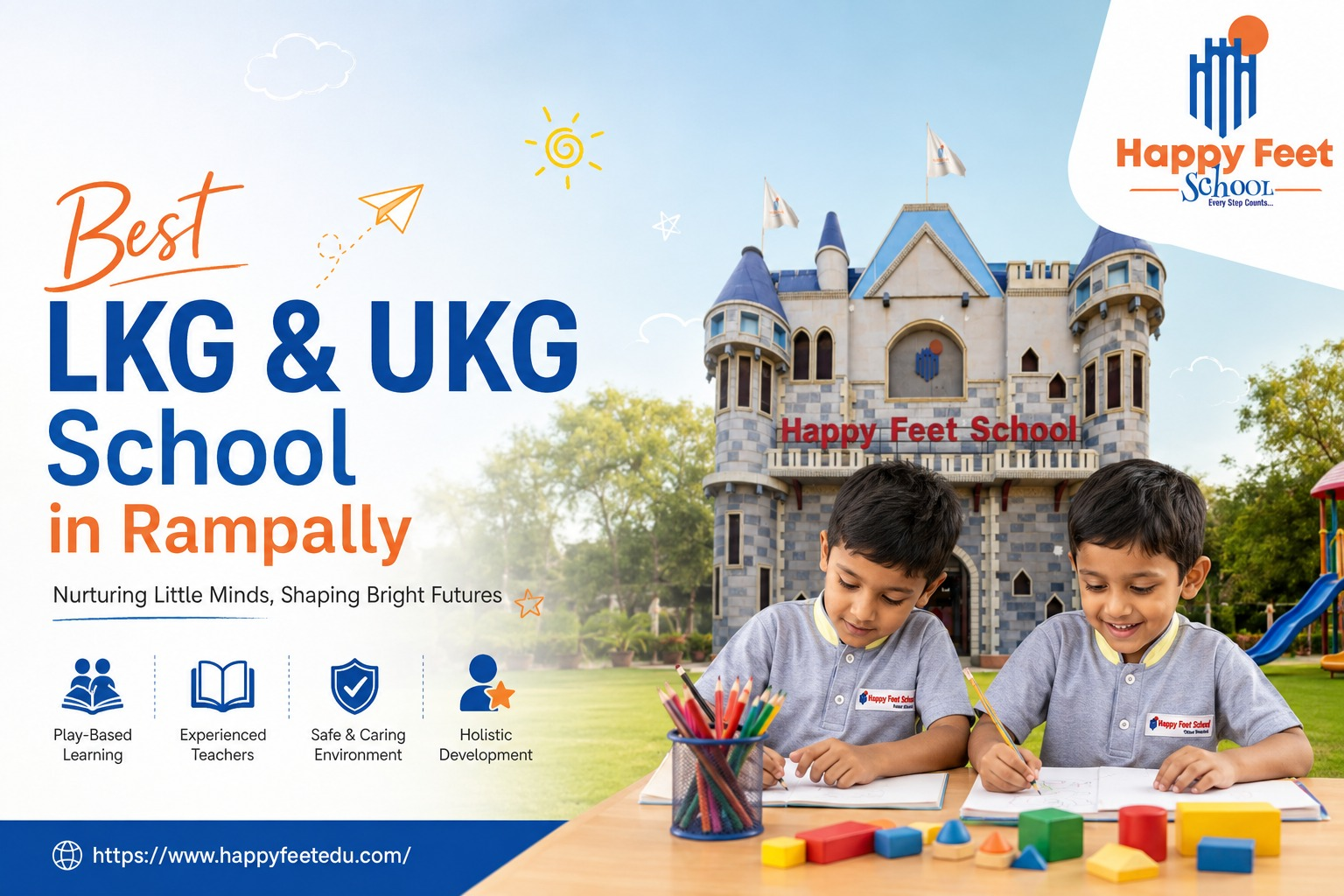
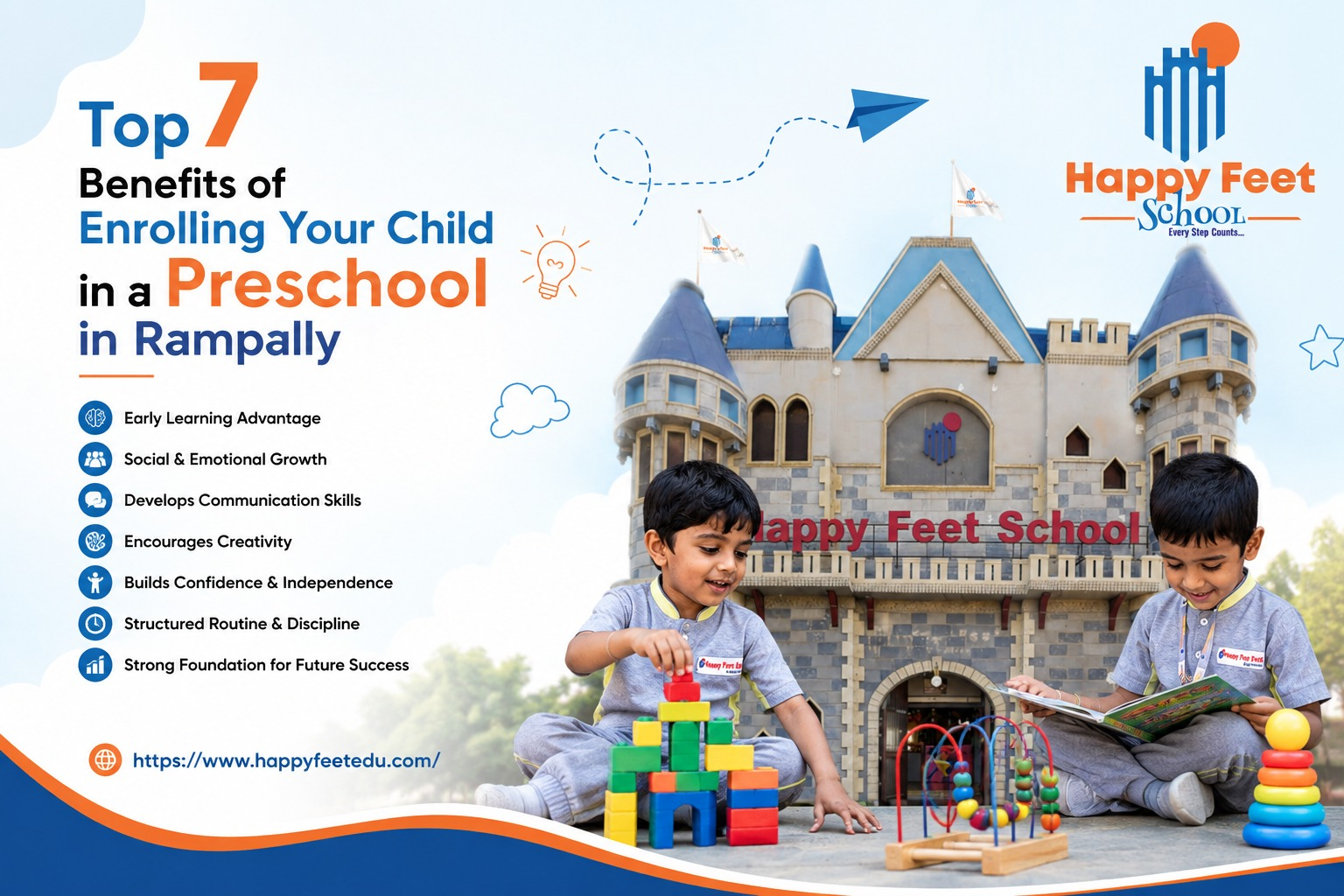
At Happy Feet, early childhood education is designed to go beyond traditional methods. The focus is on creating an environment where children feel safe, happy, and excited to learn.
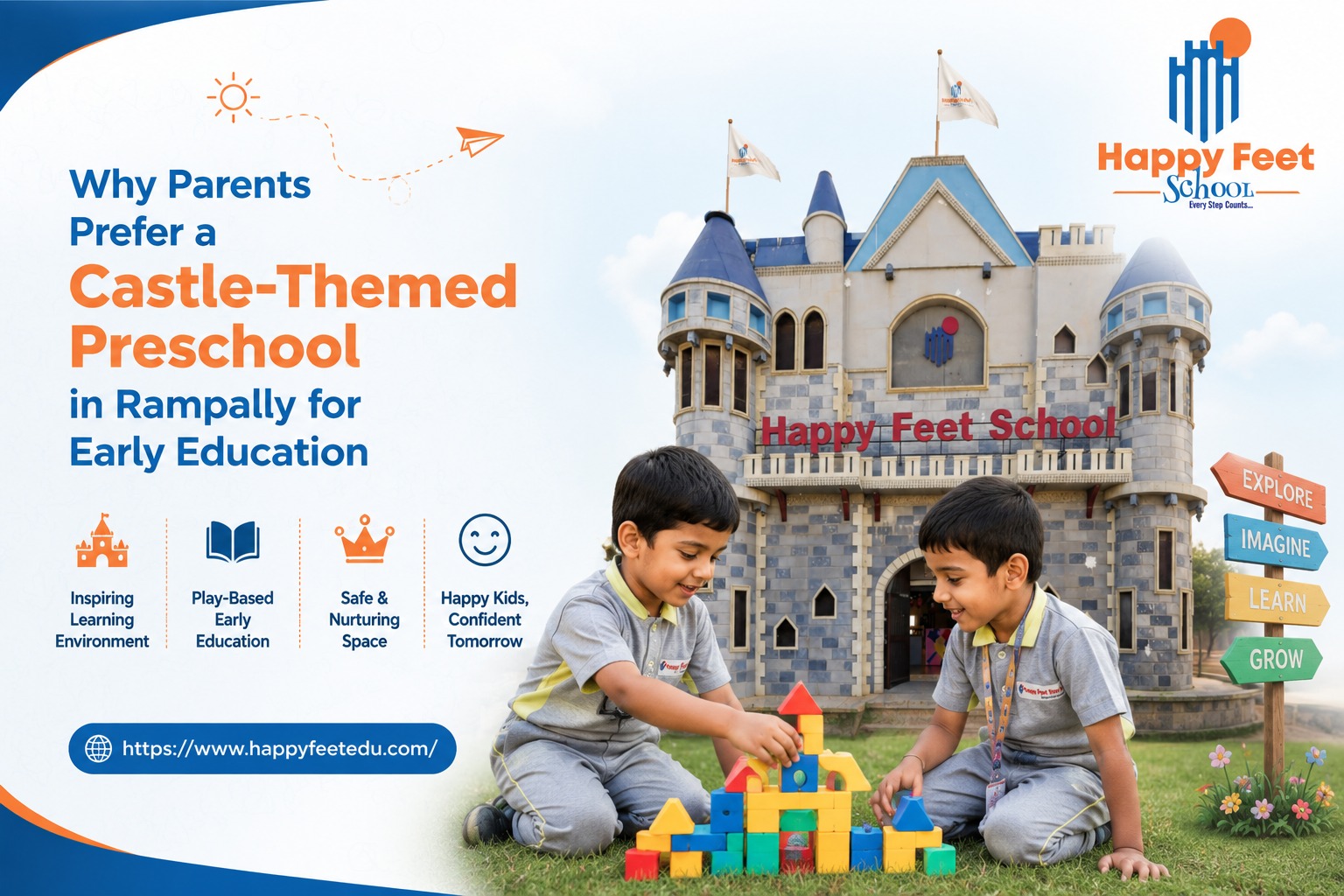
The unique castle-themed campus is not just a visual element. It is a carefully designed space that sparks imagination and encourages children to explore. When children step into an environment that feels magical, learning becomes a natural and joyful experience.
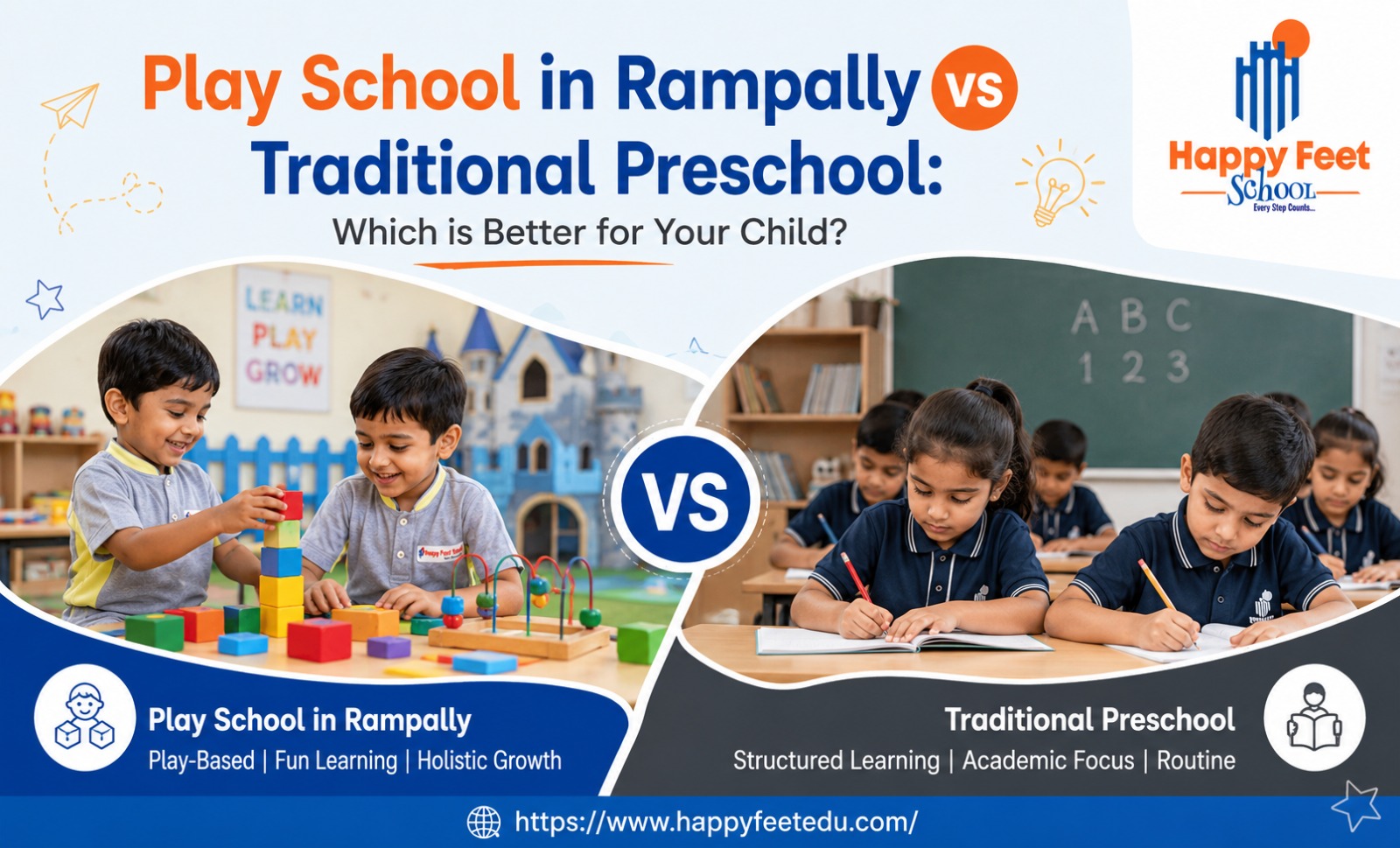
The approach at Happy Feet aligns with the evolving needs of early learning India. It combines play-based learning with structured activities, ensuring that children develop both academically and emotionally.
Programs like playgroup, nursery, PP1, and PP2 are designed to support different stages of growth. Each stage focuses on building skills that contribute to cognitive development in children while also nurturing creativity and confidence.
The emphasis is always on making learning stress-free and engaging. This ensures that children develop a positive relationship with education from the very beginning.
The Parent’s Role in Early Education
While preschools play a significant role, parents are equally important in shaping a child’s learning journey.
Parents can support early childhood education by:
-
Encouraging curiosity and asking questions
-
Reading stories and engaging in conversations
-
Providing a safe and supportive environment at home
-
Being patient and understanding during the learning process
When parents and educators work together, children receive consistent support that enhances their overall development.
Choosing the Right Start for Your Child
Selecting the right preschool is one of the most important decisions parents make. It is not just about facilities or curriculum. It is about finding a place where a child feels comfortable, valued, and inspired.
Understanding the early childhood education benefits can help parents look beyond surface-level factors and focus on what truly matters.
A preschool that prioritizes:
-
Emotional well-being
-
Play-based learning
-
Cognitive development
-
Individual attention
can set the stage for long-term academic success.
Conclusion
The journey of learning does not begin in primary school. It begins much earlier, in the small moments of curiosity, play, and discovery.
Early childhood education benefits children in ways that extend far beyond academics. It shapes how they think, learn, and interact with the world. It builds the foundation for confidence, creativity, and lifelong learning.
In a country where early learning India is gaining importance, parents have the opportunity to give their children a strong start. By understanding the importance of preschool and focusing on cognitive development in children, they can ensure that their child is prepared not just for school, but for life.
A thoughtful beginning can make all the difference. And when learning feels joyful, safe, and meaningful, success naturally follows.
Admissions Open – Limited seats available, apply today!
Contact us for more information about the project. Call: +91 85550 73254