





- By Admin
- 26 May, 2026
Play-Based Learning vs Traditional Learning: What Is Best for Your Child?
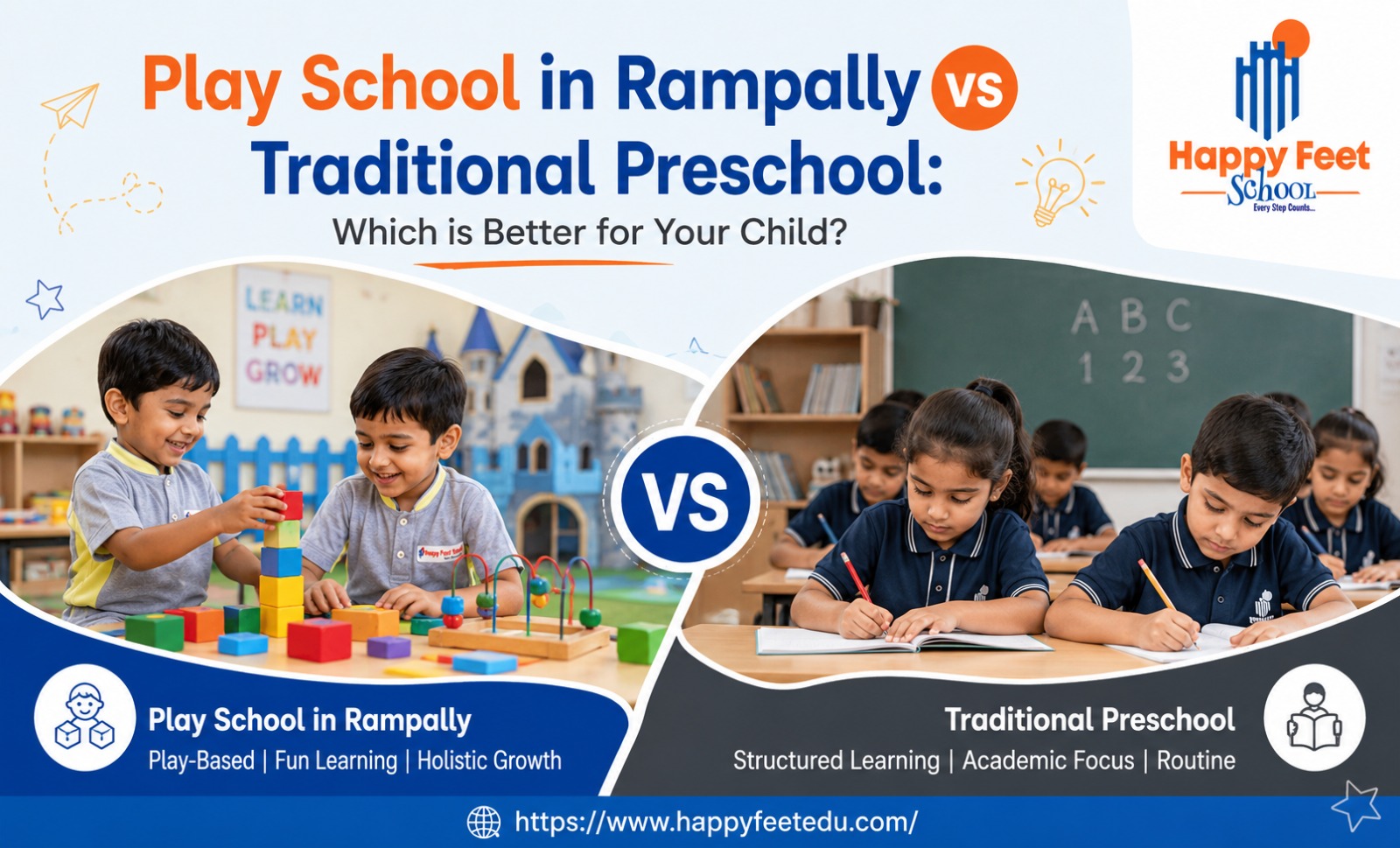
Every parent wants the best for their child, especially during the early learning years. Today, many parents come across two popular teaching methods during school admissions, play-based learning and traditional learning. While traditional learning focuses on classroom instruction, memorization, and discipline, play-based learning encourages children to learn through activities, creativity, storytelling, and hands-on experiences.
Since every child learns differently, understanding these approaches is important for making the right choice. In this blog, we will compare play-based learning and traditional learning in simple terms to help you decide what suits your child’s growth and future best.
What Is Play-Based Learning?
Play-based learning is a teaching approach where children learn through fun activities, games, storytelling, role-play, creative tasks, music, movement, and exploration.
Instead of only listening to lessons, children actively participate in learning. They touch, build, create, imagine, and interact with others while learning important life skills.
For example:
-
A child improves communication through storytelling
-
A child learns teamwork while playing group games
-
A child understands emotions through pretend play
-
A child develops creativity through art and crafts
This method supports natural child development and makes learning enjoyable instead of stressful. Play-based learning is widely recommended in modern early childhood education because it helps children grow socially, emotionally, physically, and mentally.
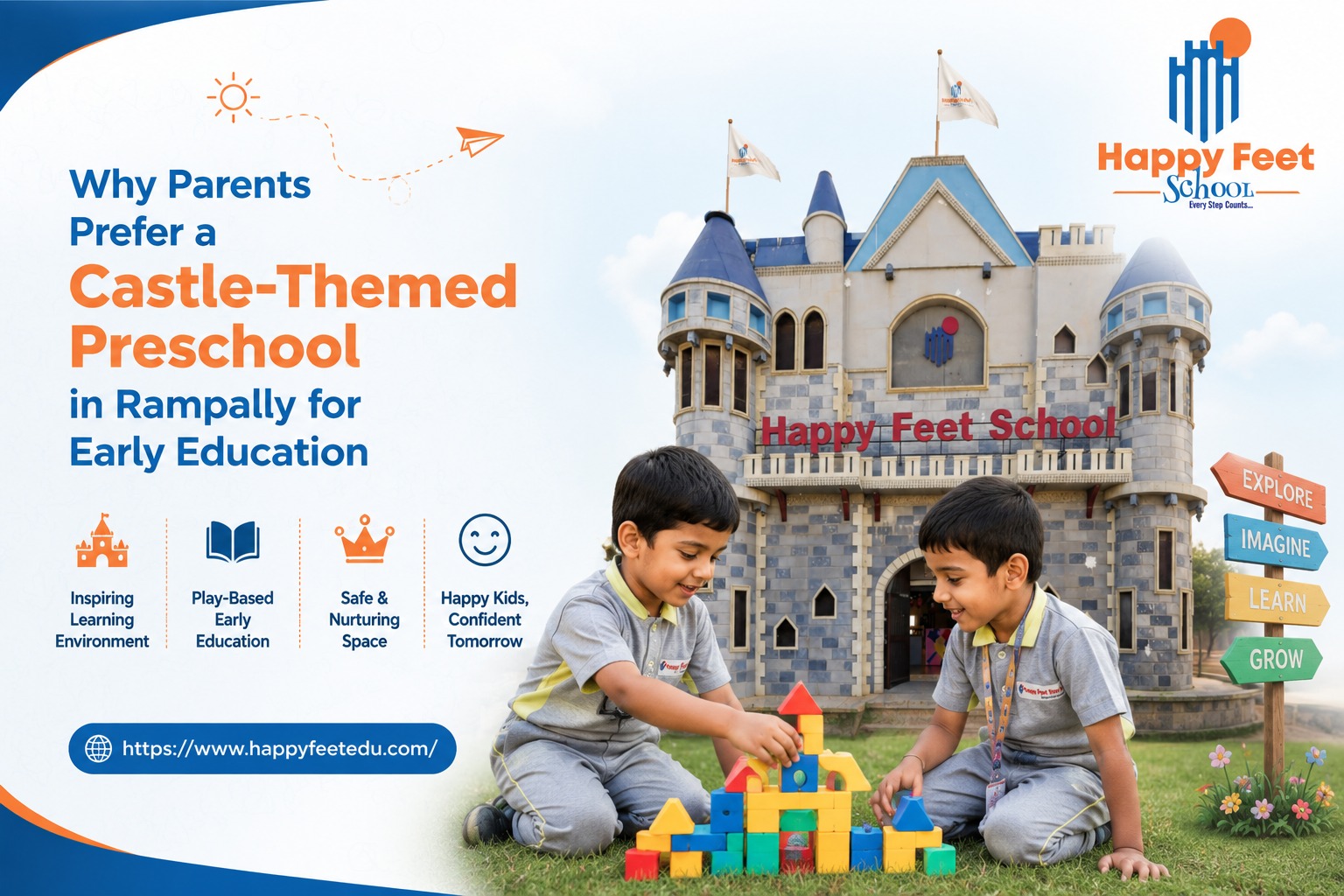
At Happy Feet, classrooms are designed to inspire imagination and curiosity. The castle-themed environment creates excitement and encourages children to explore new ideas every day.
What Is Traditional Learning?
Traditional learning is the older style of education followed in many schools for years.
In this method:
-
Teachers speak most of the time
-
Children mainly sit and listen
-
Learning often focuses on memorizing
-
Worksheets and repetition are common
-
Academic performance becomes the main goal
Traditional learning can help with discipline and structured routines. However, for very young children, this method may sometimes limit creativity and natural curiosity. Children in early childhood education learn differently from older students. They need movement, interaction, emotional connection, and hands-on experiences to fully understand concepts.
Why Early Childhood Education Matters So Much
The first few years of a child’s life are extremely important. During this stage, the brain develops very quickly.
Children build:
-
Emotional understanding
-
Problem-solving abilities
-
Social confidence
-
Physical coordination
-
Creativity and imagination
This is why early childhood education should focus on overall development instead of only academic learning. Research and child development experts around the world now support learning environments where children actively participate instead of passively listening.
Play-based learning helps children develop both academic readiness and life skills together.
Play-Based Learning vs Traditional Learning: Key Differences
|
Aspect |
Play-Based Learning |
Traditional Learning |
|
Learning Style |
Children learn through activities, games, imagination, and exploration. |
Children mainly learn through listening, memorizing, and repeating lessons. |
|
Child Participation |
Children actively participate and engage in learning activities. |
Teachers lead most of the learning while children mainly listen and follow instructions. |
|
Creativity Development |
Creativity grows naturally through storytelling, pretend play, music, and art. |
Creativity may sometimes become limited because learning is more structured and fixed. |
|
Emotional Growth |
Children learn sharing, patience, teamwork, and emotional expression. |
Emotional development may not receive equal attention in daily learning. |
|
Academic Readiness |
Children develop strong foundational skills naturally and confidently. |
Academic concepts are introduced directly through classroom teaching methods. |
|
Problem-Solving Skills |
Children learn to think independently and solve problems through activities and experiments. |
Problem-solving is usually taught through textbook exercises and teacher guidance. |
|
Communication Skills |
Encourages children to talk, interact, and express ideas freely. |
Communication is often limited to classroom discussions and answering questions. |
|
Learning Environment |
Fun, flexible, and activity-based environment that keeps children engaged. |
Structured classroom setup with fixed schedules and routines. |
|
Focus on Development |
Supports overall development including social, emotional, physical, and cognitive growth. |
Mainly focuses on academic performance and subject knowledge. |
|
Interest in Learning |
Makes learning enjoyable, helping children stay curious and motivated. |
Learning can sometimes feel repetitive or stressful for young children. |
How Play Based Learning Supports Baby Milestones
Every parent closely watches baby milestones during the early years. These milestones include speech, movement, emotional response, social interaction, and thinking skills.
Play-based learning helps children achieve these milestones naturally and joyfully.
For example:
Language Development: Children improve their speaking and listening through songs, storytelling, and conversations.
Motor Skills: Activities like dancing, running, building blocks, and drawing improve physical coordination.
Social Skills: Group activities help children learn sharing, friendship, teamwork, and communication.
Confidence Building: Children feel proud when they explore and solve problems independently.
Emotional Understanding: Role play and interactive learning help children express feelings better.
At Happy Feet, children experience learning in a warm and caring environment where every child receives personalized attention and encouragement.
Why Modern Parents Prefer Play-Based Learning
Today’s world is changing very fast. Children now need more than textbook knowledge to succeed in life.
Parents are looking for schools that help children become
-
Confident
-
Creative
-
Independent
-
Curious
-
Emotionally strong
-
Socially active
This is one major reason why play-based learning is becoming more popular among modern parents. Children who enjoy learning during early childhood education often develop a lifelong love for learning. They become more open to asking questions, exploring ideas, and solving problems confidently.
The Importance of Safe and Happy Learning Spaces
A child learns best when they feel emotionally safe and comfortable. Many parents focus only on academics while selecting schools. However, emotional safety and happiness are equally important.
This unique environment supports:
-
Creative thinking
-
Curiosity
-
Social interaction
-
Emotional confidence
-
Active participation
How Parents Play an Important Role in Learning
A child’s learning journey becomes stronger when schools and parents work together. This partnership helps children feel more secure, confident, and supported both at school and at home.
Parents can support play-based learning by:
-
Reading stories together
-
Encouraging outdoor play
-
Asking open-ended questions
-
Allowing creative activities
-
Reducing screen time
-
Celebrating curiosity
Simple daily interactions can make a big difference in child development.
Can Traditional Learning Still Be Helpful?
Traditional learning is not completely wrong. Some structure and discipline are important for children as they grow.
In fact, a balanced approach often works best.
Children need:
-
Routine
-
Guidance
-
Basic academic preparation
-
Social interaction
-
Creativity
-
Exploration
The problem happens when learning becomes only about memorization and pressure. Good schools combine structured learning with creative and interactive experiences.
How Happy Feet Creates Meaningful Learning Experiences
Happy Feet is not just a preschool. It is a place where children discover learning through imagination, creativity, and play. As Hyderabad’s first castle-themed school, Happy Feet creates a magical environment where children feel excited to learn every day.
The school focuses on:
-
Play-based learning
-
Personalized care
-
Hands-on experiences
-
Creative activities
-
Emotional development
-
Safe learning spaces
-
Parent involvement
Children are encouraged to ask questions, express ideas, explore freely, and learn through real experiences. The goal is not only academic success but also overall child development.
Parents looking for a preschool that supports creativity, confidence, and strong early childhood education often choose Happy Feet because of its child-friendly learning approach.
Final Thoughts
Every parent wants their child to feel happy, confident, and successful. While traditional learning focuses mainly on academic structure, play-based learning supports complete child development during the most important early years. This is why many child development experts and modern parents now prefer play-based learning during early childhood education.
At Happy Feet, children experience a world where learning becomes joyful, creative, and meaningful. The castle-themed environment, caring teachers, personalized attention, and hands-on experiences help children build confidence and curiosity naturally. When children enjoy learning from the beginning, they carry that love for learning throughout life.
Choosing the right preschool is not only about academics. It is about finding a place where your child feels happy, valued, safe, and inspired every single day.
FAQs
1. What is play based learning in preschool?
Play based learning is a teaching method where children learn through activities, games, storytelling, creativity, and hands-on experiences instead of only memorizing lessons.
2. Is play based learning better than traditional learning?
For early childhood education, many experts believe play based learning supports better emotional, social, and creative development while also building academic readiness naturally.
3. How does play based learning help baby milestones?
Play based learning improves communication, motor skills, emotional growth, confidence, and social interaction, which are important baby milestones during early development.
4. Why do parents prefer play based learning today?
Modern parents prefer play based learning because it encourages creativity, confidence, curiosity, problem-solving, and joyful learning experiences.
5. Why is Happy Feet different from other preschools?
Happy Feet is Hyderabad’s first castle themed school that focuses on play based learning, creativity, hands-on experiences, personalized care, and active parent partnership to support complete child development.