





- By Admin
- 01 Jul, 2026
The Power of Early Language Learning
Every parent feels excited when they hear their child say their first word. Those small moments may seem simple, but they mark the beginning of something powerful. Language is much more than speaking. It is how children express feelings, build friendships, ask questions, understand the world, and grow into confident learners.
Early language development plays a major role in shaping a child's future. Research and educational experts agree that the first few years of life are critical for learning language. During this period, a child's brain develops rapidly and absorbs information from every interaction, conversation, story, song, and play activity.
Children who develop strong language skills early often find it easier to learn, communicate, solve problems, and build relationships. This is why parents and educators should focus on creating language-rich environments from the beginning.
In this blog, we will explore why early language learning matters, how it supports lifelong success, and what parents can do to encourage healthy language development at home.
What Is Early Language Development?
Language development is the process through which children learn to understand, use, and communicate through words, sounds, gestures, and expressions.
It includes:
-
Listening skills
-
Understanding words and meanings
-
Speaking clearly
-
Building vocabulary
-
Asking and answering questions
-
Expressing emotions
-
Storytelling skills
-
Social communication
Language development starts long before children begin speaking. Babies listen to voices, recognize sounds, and learn patterns of communication from the people around them. Every conversation, song, bedtime story, and playful interaction helps strengthen language skills.
Why Early Language Learning Matters
The early years provide the strongest foundation for future learning.
When children develop language skills at a young age, they gain the ability to:
-
Communicate their thoughts clearly
-
Understand instructions
-
Build relationships
-
Express emotions confidently
-
Learn reading and writing more easily
-
Participate actively in school
-
Develop critical thinking skills
Strong language abilities help children feel confident and connected to the world around them. Without effective language skills, children may struggle to express their needs, understand classroom activities, or interact comfortably with others.
The Connection Between Language Development and Brain Growth
A child's brain develops rapidly during the first five years of life.
Every conversation creates new neural connections. The more children hear and use language, the stronger these connections become.
Language learning supports:
Cognitive Development
Children learn how to think, reason, remember, and solve problems through language.
When children ask questions like:
-
Why is the sky blue?
-
Where does rain come from?
-
How does a car move?
They are developing both language and thinking skills.
Memory Development
Listening to stories and conversations helps children remember information and improve concentration.
Learning Ability
Children with strong language skills often find it easier to understand classroom lessons and instructions.
How Language Development Supports Academic Success
Many parents focus on reading and writing readiness before school admission. However, language development begins much earlier. Children who can listen, understand, and communicate effectively are often better prepared for academic learning.
Benefits include:
Better Reading Skills
Language helps children understand sounds, words, and sentence structures that are essential for reading.
Stronger Vocabulary
A rich vocabulary supports reading comprehension and learning across all subjects.
Improved Classroom Participation
Children who can express themselves confidently are more likely to ask questions and engage in learning activities.
Greater Confidence
Confident communication often leads to higher participation and stronger academic performance.
The Role of Language in Social Development
Language is not only about learning. It is also about connecting with others.
Children use language to:
-
Make friends
-
Share ideas
-
Solve conflicts
-
Understand emotions
-
Build relationships
When children can communicate effectively, they feel more confident in social situations. Strong language skills help children navigate group activities, classroom discussions, and friendships successfully.
Why Kids Talking More Helps Their Growth
Parents often wonder if their child is talking enough.
The truth is that encouraging kids to talk regularly helps support multiple areas of development.
When children talk frequently, they practice:
-
Vocabulary building
-
Sentence formation
-
Listening skills
-
Social interaction
-
Emotional expression
The more opportunities children have to speak, the more confident and capable they become.
How Play-Based Learning Improves Language Development
Children learn best when they are actively engaged.
Play-based learning creates meaningful opportunities for language development.
Through play, children learn to:
-
Ask questions
-
Describe experiences
-
Share ideas
-
Follow instructions
-
Use new vocabulary
For example:
Pretend Play
When children play shopkeeper, doctor, teacher, or chef, they naturally practice communication skills.
Storytelling Activities
Stories introduce new words and encourage imagination.
Group Games
Children learn turn-taking, listening, and conversation skills.
Music and Rhymes
Songs and rhymes strengthen pronunciation, memory, and vocabulary.
This is one reason why play-based learning remains a key part of the Happy Feet educational approach.
Simple Ways Parents Can Encourage Language Development at Home
Parents play a powerful role in helping children develop language skills.
Here are practical strategies:
Talk Throughout the Day
Describe daily activities, surroundings, and experiences.
For example:
-
"We are washing the vegetables."
-
"Look at the yellow butterfly."
Simple conversations expose children to new words.
Read Every Day
Reading remains one of the most effective ways to improve language development.
Choose age-appropriate books and ask questions while reading.
Encourage Questions
Welcome curiosity. Answer questions patiently and encourage children to explore ideas through conversation.
Sing Songs and Rhymes
Music makes language learning fun and memorable.
Limit Passive Screen Time
Real conversations provide greater language-learning benefits than passive viewing.
Listen Actively
Give children time to speak and express themselves fully.
How Preschool Environments Influence Language Learning
Children spend a significant amount of time in preschool. The learning environment plays a major role in language development.
An effective preschool should provide:
-
Daily conversations
-
Interactive learning experiences
-
Storytelling opportunities
-
Group discussions
-
Creative play
-
Supportive teachers
Children thrive when they feel safe, heard, and encouraged to communicate. At Happy Feet, every activity is designed to encourage communication, curiosity, and confidence.
The Lifelong Benefits of Early Language Learning
The impact of early language development extends far beyond preschool. Children with strong communication skills often experience:
-
Better academic performance
-
Stronger social relationships
-
Greater confidence
-
Improved emotional intelligence
-
Better problem-solving abilities
-
Enhanced leadership skills
-
Stronger future career opportunities
Language becomes the foundation for learning, growth, and success throughout life. The conversations children have today can shape the opportunities they experience tomorrow.
Why Parent and Teacher Partnership Matters
Language learning becomes more effective when parents and teachers work together. When both environments support communication, children receive consistent opportunities to practice and grow.
A strong parent-school partnership helps:
-
Track progress
-
Reinforce learning at home
-
Build confidence
-
Support communication goals
At Happy Feet, active parent involvement is an important part of every child's learning journey.
How Happy Feet Supports Language Development
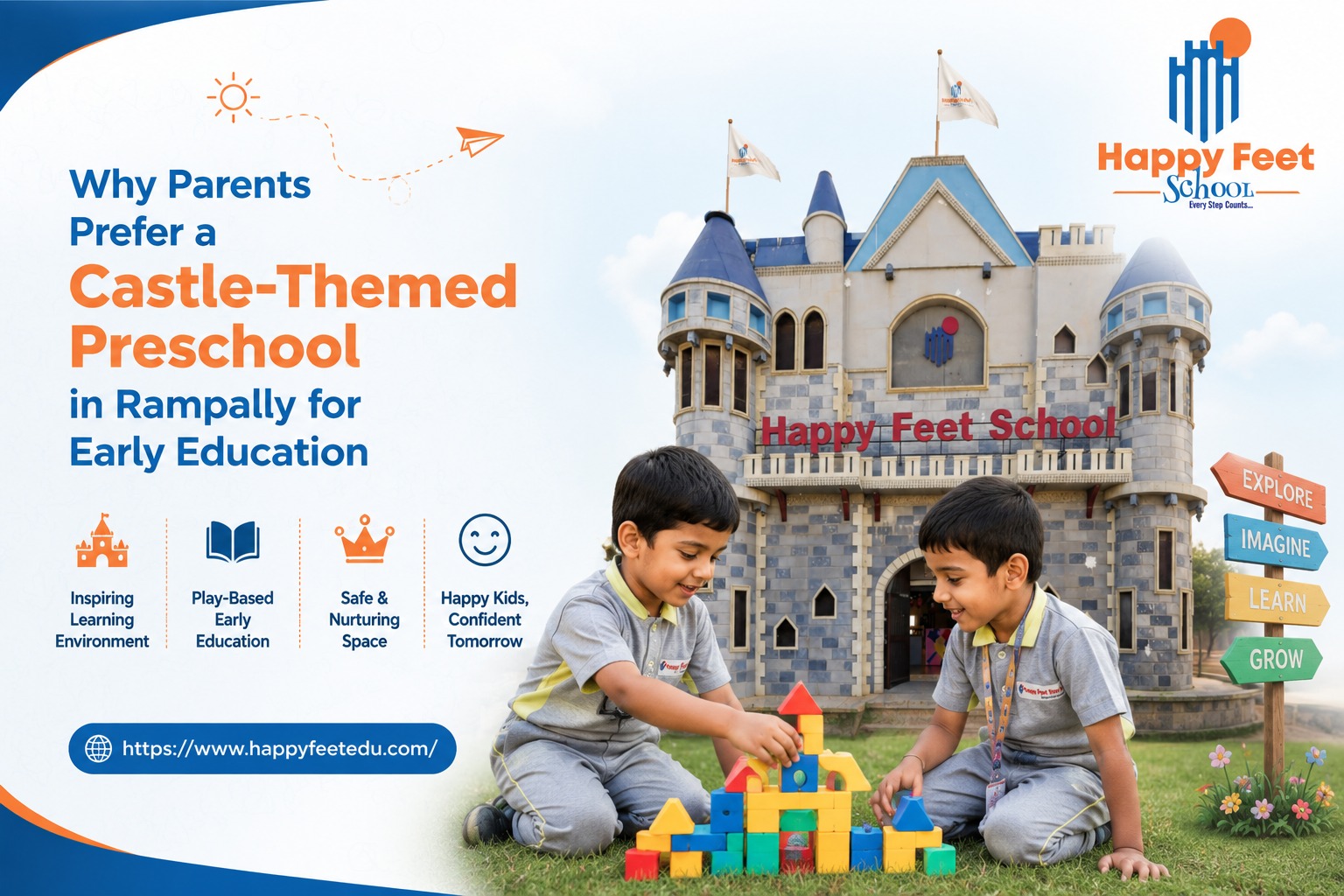
At Happy Feet, we believe that every child deserves an environment where communication flourishes naturally. Our castle-themed learning space inspires imagination and encourages children to express themselves freely.
We support language development through:
-
Storytelling sessions
-
Interactive classroom discussions
-
Creative role-play activities
-
Music and movement programs
-
Play-based learning experiences
-
Small group interactions
-
Personalized teacher attention
Children learn language best when they feel comfortable, curious, and engaged. Our approach helps children become confident communicators while enjoying every step of the learning process.
To learn more about our learning philosophy, visit Happy Feet Preschool..
Conclusion
Early language development is one of the greatest gifts parents and educators can provide to a child. Language helps children understand the world, build relationships, express ideas, and succeed academically. The first few years of life offer a unique opportunity to develop these essential skills. Through meaningful conversations, storytelling, play-based learning, and supportive environments, children can build strong communication abilities that benefit them for life.
At Happy Feet, we are committed to nurturing confident communicators through engaging experiences, personalized care, and a learning environment that inspires curiosity and creativity. If you are looking for a preschool that supports your child's language development, communication skills and overall growth, Happy Feet is here to help your child begin a lifelong journey of learning and discovery.
Frequently Asked Questions (FAQs)
1. Why is language development important in early childhood?
Language development helps children communicate, understand instructions, express emotions, build relationships, and succeed academically. Strong language skills create a foundation for lifelong learning.
2. At what age does language development begin?
Language development begins from birth. Babies start learning language by listening to voices, sounds, and interactions around them even before they speak their first words.
3. How can parents improve their child's language development?
Parents can support language development by talking regularly, reading books, singing songs, asking questions, and engaging in meaningful conversations every day.
4. How does play-based learning support language development?
Play-based learning encourages children to communicate naturally through storytelling, role-playing, group activities, and imaginative play, helping them develop vocabulary and speaking confidence.
5. Why is preschool important for language development?
A quality preschool provides structured opportunities for communication, social interaction, storytelling, and collaborative learning, all of which help strengthen language skills and confidence.