





- By Admin
- 01 Jul, 2026
Worried for Childrens Safety at Nursery School
As parents, nothing matters more than the safety of our children. The moment we think about sending our little ones to a nursery school, many questions come to mind. Will my child be safe? Who will take care of them? How does the school handle emergencies? Are teachers trained to protect children? These concerns are completely natural.
For young children, school is often the first place away from home where they spend several hours every day. This makes safety rules at school one of the most important factors when selecting a nursery or preschool. A safe school does much more than protect children from accidents. It creates a secure environment where children feel comfortable, confident, and ready to learn. When children feel safe, they explore, interact, play, and develop important life skills.
In this blog, we will explore the importance of safety at school, the essential safety measures every nursery school should have, and how parents can identify the right school for their child.
Why Safety at School Matters for Young Children
Children between the ages of two and five are naturally curious. They love to run, jump, explore, and discover new things. While this curiosity helps them learn, it also means they need close supervision and a safe environment.
Strong safety rules at school help:
-
Prevent accidents and injuries
-
Build children's confidence
-
Support emotional well-being
-
Create trust between parents and schools
-
Encourage active learning and exploration
-
Ensure healthy social interactions
When safety becomes a priority, children can focus on learning rather than feeling anxious or uncomfortable.
Common Concerns Parents Have About Nursery School Safety
Most parents share similar worries when looking for a preschool. These concerns often include:
Physical Safety
Parents want to know whether classrooms, playgrounds, and school facilities are child-friendly and secure.
Health and Hygiene
Clean classrooms, sanitized toys, and proper hygiene practices are important for preventing illnesses.
Supervision
Children need constant monitoring during learning activities, playtime, and meal breaks.
Emergency Preparedness
Schools should have plans in place for medical emergencies, fire safety, and unexpected situations.
Safe Pick-Up and Drop-Off
Parents need assurance that children are handed over only to authorized guardians.
Good nursery schools address all these concerns through clear policies and strong safety practices.
Essential Safety Rules at School Every Nursery Should Follow
1. Secure School Campus
The first step toward ensuring safety at school is having a secure campus.
A well-protected school should have:
-
Controlled entry and exit points
-
Visitor verification procedures
-
Security personnel
-
Child-safe gates and doors
-
CCTV monitoring in common areas
These measures help ensure that only authorized individuals can enter school premises.
2. Child-Friendly Infrastructure
Young children learn best when they can move freely in a safe environment.
Safe nursery schools should provide:
-
Rounded furniture edges
-
Non-slip flooring
-
Covered electrical outlets
-
Safe classroom layouts
-
Age-appropriate learning materials
The school environment should reduce risks while encouraging exploration.
3. Qualified and Trained Staff
Teachers play a major role in maintaining safety rules at school.
Staff members should be trained in:
-
Child supervision
-
First aid procedures
-
Emergency response
-
Child behavior management
-
Safe classroom practices
Well-trained educators can quickly identify and respond to potential risks.
4. Proper Teacher-to-Child Ratio
Young children require personal attention.
A lower teacher-to-child ratio helps ensure:
-
Better supervision
-
Faster response during emergencies
-
Stronger emotional support
-
Improved learning experiences
Children feel more secure when teachers can give them individual attention.
5. Safe and Clean Play Areas
Play is an important part of early childhood education.
Safe playgrounds should include:
-
Soft flooring surfaces
-
Regular equipment inspections
-
Age-appropriate play structures
-
Constant adult supervision
-
Clear safety guidelines
Playgrounds should encourage fun while minimizing risks.
6. Emergency Response Procedures
Every nursery school should be prepared for unexpected situations.
Important emergency measures include:
-
Fire safety drills
-
First aid kits
-
Emergency contact systems
-
Medical support procedures
-
Staff emergency training
Parents should ask schools how emergencies are handled before admission.
7. Health and Hygiene Standards
Good hygiene is a critical part of safety at school.
Schools should maintain:
-
Clean classrooms
-
Sanitized toys
-
Regular cleaning schedules
-
Safe drinking water
-
Healthy washroom facilities
Healthy environments help reduce the spread of infections and illnesses.
8. Safe Transportation Practices
If a school offers transportation, safety standards become even more important.
Safe school transportation should include:
-
Verified drivers
-
Trained attendants
-
Vehicle safety checks
-
GPS tracking where available
-
Clear child handover procedures
Transportation safety provides additional peace of mind for parents.
How Emotional Safety is Just as Important
Physical safety is only one part of a child's well-being.
Emotional safety helps children feel valued, respected, and confident.
A nursery school should create an environment where children
-
Feel welcome
-
Are encouraged to express themselves
-
Receive positive guidance
-
Build healthy friendships
-
Develop self-confidence
When children feel emotionally secure, they participate more actively in learning activities.
Signs of a Safe Nursery School
When visiting schools, parents should observe carefully.
Look for these positive signs:
Friendly and Attentive Teachers
Teachers should interact warmly with children and respond to their needs quickly.
Clean Learning Spaces
Classrooms should appear organized, hygienic, and child-friendly.
Happy Children
Children who feel safe often appear relaxed, engaged, and enthusiastic.
Clear Communication
Schools should openly discuss safety policies and procedures with parents.
Strong Parent Partnership
The best schools believe that safety is a shared responsibility between parents and educators.
At Happy Feet, active parent involvement helps create a stronger support system for every child.
Questions Parents Should Ask Before Admission
Before selecting a nursery school, consider asking:
-
What safety rules at school are followed daily?
-
How are visitors monitored?
-
What happens during a medical emergency?
-
How often are safety drills conducted?
-
What is the teacher-to-child ratio?
-
How are children supervised during playtime?
-
What hygiene standards are maintained?
-
How does the school communicate with parents?
These questions can help parents make informed decisions.
The Role of Parents in Supporting School Safety
Schools and parents work best when they work together.
Parents can support safety at school by:
-
Keeping emergency contact details updated
-
Informing teachers about medical conditions
-
Teaching children basic safety habits
-
Following school pick-up procedures
-
Maintaining open communication with educators
A strong partnership creates a safer environment for everyone.
Why Safety Builds Better Learning Outcomes
Children learn more effectively when they feel protected.
Research and experience show that safe learning environments help children:
-
Develop confidence
-
Improve concentration
-
Participate actively
-
Build social skills
-
Explore new ideas freely
This is why safety should never be viewed as a separate feature. It is the foundation of quality education.
How Happy Feet Creates a Safe Learning Environment
At Happy Feet, child safety is part of our everyday culture.
Our approach combines:
-
Safe and child-friendly learning spaces
-
Caring and attentive educators
-
Play-based learning methods
-
Active parent communication
-
Personalized attention for every child
-
Structured supervision throughout the day
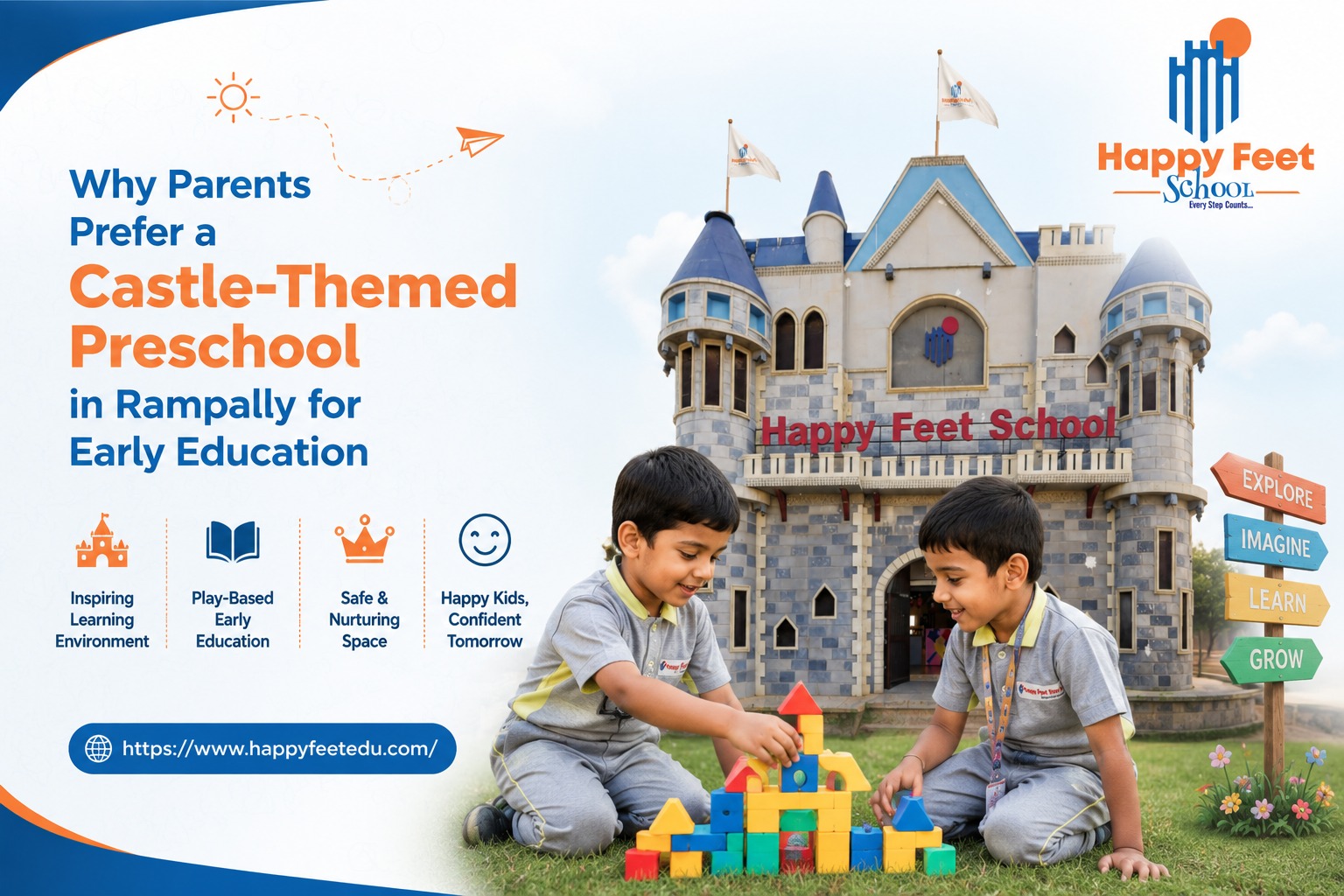
As Hyderabad's first castle-themed school, we have designed an environment where children can learn, play, imagine, and grow while feeling secure and supported. Parents looking for a nurturing preschool experience can explore our About Happy Feet page to learn more about our philosophy and commitment to child development.
You can also discover our early learning programs designed to support every stage of a child's growth.
Conclusion
Choosing a nursery school is not just about academics. It is about finding a place where your child feels safe, happy, and confident every day. Strong safety rules at school create the foundation for learning, creativity, and emotional growth. From secure campuses and trained staff to hygiene practices and emergency preparedness, every aspect of school safety matters. As parents, taking the time to evaluate a school's safety measures can provide peace of mind and help your child begin their educational journey with confidence.
At Happy Feet, we believe every child deserves a safe space where curiosity can grow, imagination can flourish, and learning becomes a joyful experience. When children feel safe, they are free to become the best version of themselves.
Frequently Asked Questions (FAQs)
1. Why are safety rules at school important for nursery children?
Safety rules at school help protect young children from accidents, injuries, and health risks. They also create a secure environment where children can learn and play confidently.
2. What should parents look for when checking safety at school?
Parents should look for secure entry systems, trained staff, clean classrooms, safe playgrounds, emergency procedures, and proper supervision.
3. How do nursery schools handle emergencies?
Most quality nursery schools follow emergency response plans that include first aid procedures, emergency contacts, fire drills, and trained staff members.
4. How can parents support school safety?
Parents can support safety by updating emergency information, teaching basic safety habits, following school procedures, and maintaining communication with teachers.
5. Why is emotional safety important in preschool?
Emotional safety helps children feel comfortable, confident, and supported. It encourages participation, learning, creativity, and positive social development.