





- By Admin
- 29 Apr, 2026
Benefits of Activity-Based Learning for Young Children
Every parent wants their child to enjoy learning. Not just score well, but actually look forward to going to school.
This is where the shift from traditional methods to more engaging approaches becomes important. One of the most effective approaches today is activity-based learning.
The activity-based learning benefits go far beyond academics. It helps children understand, explore, and grow in a way that feels natural to them.
Instead of memorizing information, children experience it. They touch, build, create, and interact. This makes learning meaningful and long-lasting.
At Happy Feet, this approach is not treated as an add-on. It is the foundation of how children learn every single day.
What Is Activity-Based Learning
Activity-based learning is a method where children learn by doing.
Instead of listening passively, they participate actively.
This includes:
-
Games and group activities
-
Storytelling and role play
-
Creative tasks like drawing and building
-
Real-life simulations
-
Hands-on problem solving
This method is closely connected to hands-on learning and experiential education, where children gain knowledge through direct experience.
At Happy Feet, children are not asked to sit and absorb information. They are encouraged to explore and discover it on their own.
Why Traditional Learning Alone Is Not Enough
In many traditional settings, children are expected to:
-
Sit still for long periods
-
Listen and repeat
-
Memorize without understanding
While this may work at later stages, it does not suit early childhood.
Young children learn best through movement, interaction, and play. This is where activity-based learning benefits become clearly visible.
At Happy Feet, learning is designed to match how children naturally think and behave. This makes the entire experience more effective and enjoyable.
The Science Behind Learning Through Play
Children’s brains develop rapidly in the early years. During this time, they learn through:
-
Exploration
-
Curiosity
-
Repetition
-
Interaction
This is why learning through play is considered one of the most effective ways to teach young children.
When children play, they are:
-
Making decisions
-
Solving problems
-
Testing ideas
-
Building understanding
At Happy Feet, play is not separate from learning. It is the way learning happens.
Key Activity-Based Learning Benefits
Let’s explore the most important activity-based learning benefits and how they shape a child’s development.
1. Better Understanding of Concepts
Children understand better when they experience something.
For example, instead of just hearing about shapes, they can:
-
Identify shapes in objects
-
Build shapes using blocks
-
Sort items based on shapes
This makes learning clear and practical.
At Happy Feet, every concept is introduced through activities that children can see, touch, and explore.
2. Improved Memory Retention
Children remember what they do more than what they hear.
When learning is activity-based:
-
Information stays longer
-
Concepts become easier to recall
-
Learning feels natural
This is one of the strongest activity-based learning benefits.
3. Stronger Communication Skills
Activities encourage children to:
-
Talk to each other
-
Ask questions
-
Express ideas
This improves language and communication.
At Happy Feet, group activities and storytelling sessions help children become confident communicators.
4. Development of Social Skills
Children learn how to:
-
Share
-
Cooperate
-
Work in teams
-
Resolve small conflicts
These social skills are essential for school and life.
Through hands-on learning activities at Happy Feet, children interact and learn from each other naturally.
5. Boost in Confidence
When children complete activities on their own, they feel a sense of achievement.
This builds:
-
Self-confidence
-
Independence
-
Willingness to try new things
At Happy Feet, children are encouraged to explore without fear of making mistakes.
6. Encourages Creativity and Imagination
Creative activities allow children to think freely.
They can:
-
Imagine stories
-
Create art
-
Build structures
-
Role-play situations
This is a core part of experiential education.
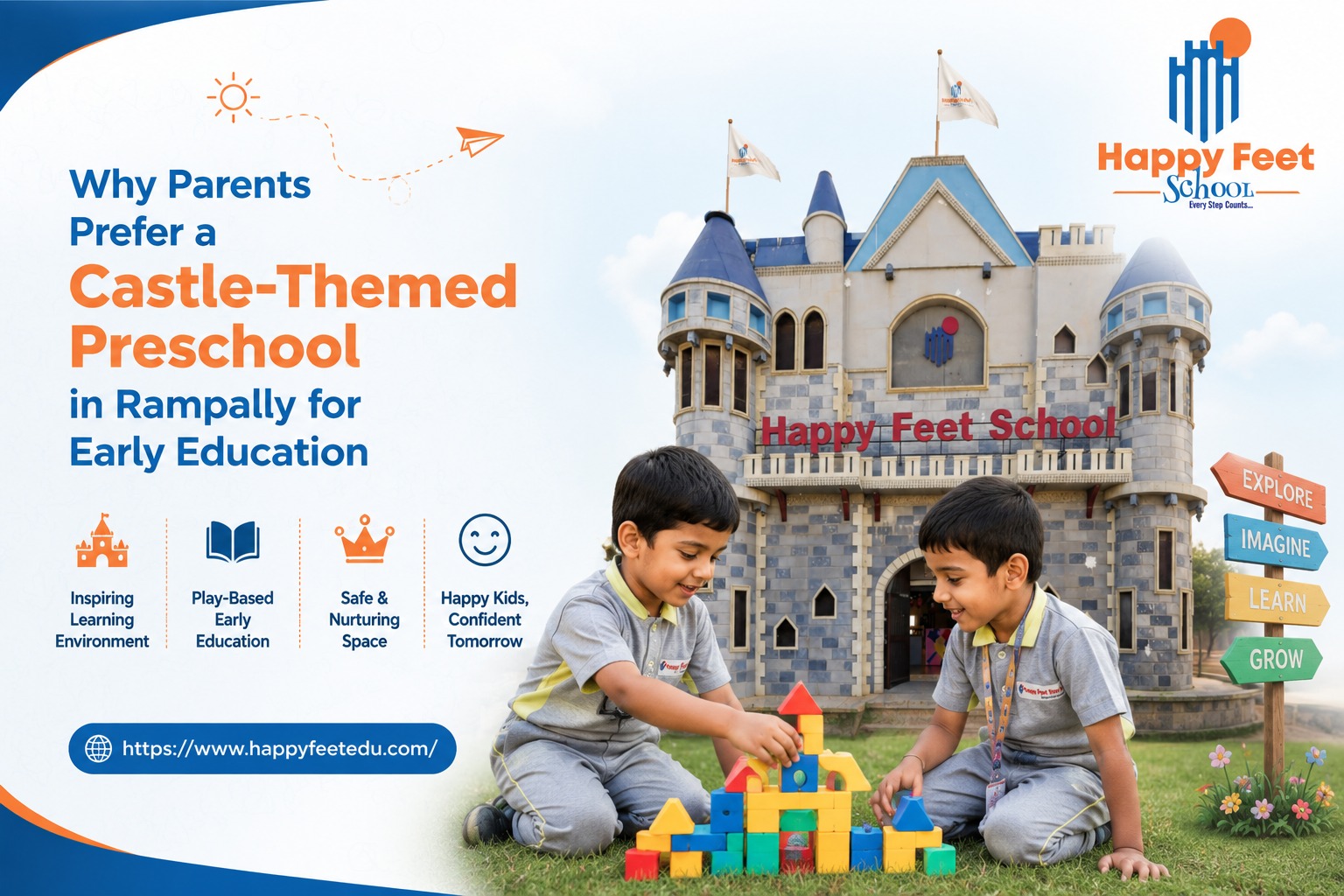
The castle-themed environment at Happy Feet adds to this imagination, making learning feel like an adventure.
7. Enhances Problem-Solving Skills
When children face challenges during activities, they learn to:
-
Think logically
-
Try different solutions
-
Learn from mistakes
This builds strong problem-solving abilities.
8. Improves Focus and Engagement
Children stay engaged when learning is interactive.
Activities help them:
-
Stay focused longer
-
Participate actively
-
Enjoy the process
At Happy Feet, the balance of fun and structure ensures that children remain interested throughout the day.
9. Supports Emotional Development
Activity-based learning creates a safe space for children to:
-
Express emotions
-
Build relationships
-
Feel understood
This emotional comfort plays a key role in overall development.
At Happy Feet, emotional well-being is given as much importance as learning.
10. Prepares Children for Real-World Learning
One of the biggest activity-based learning benefits is that it prepares children for practical situations.
They learn how to:
-
Work with others
-
Follow instructions
-
Adapt to new environments
This makes the transition to formal schooling much smoother.
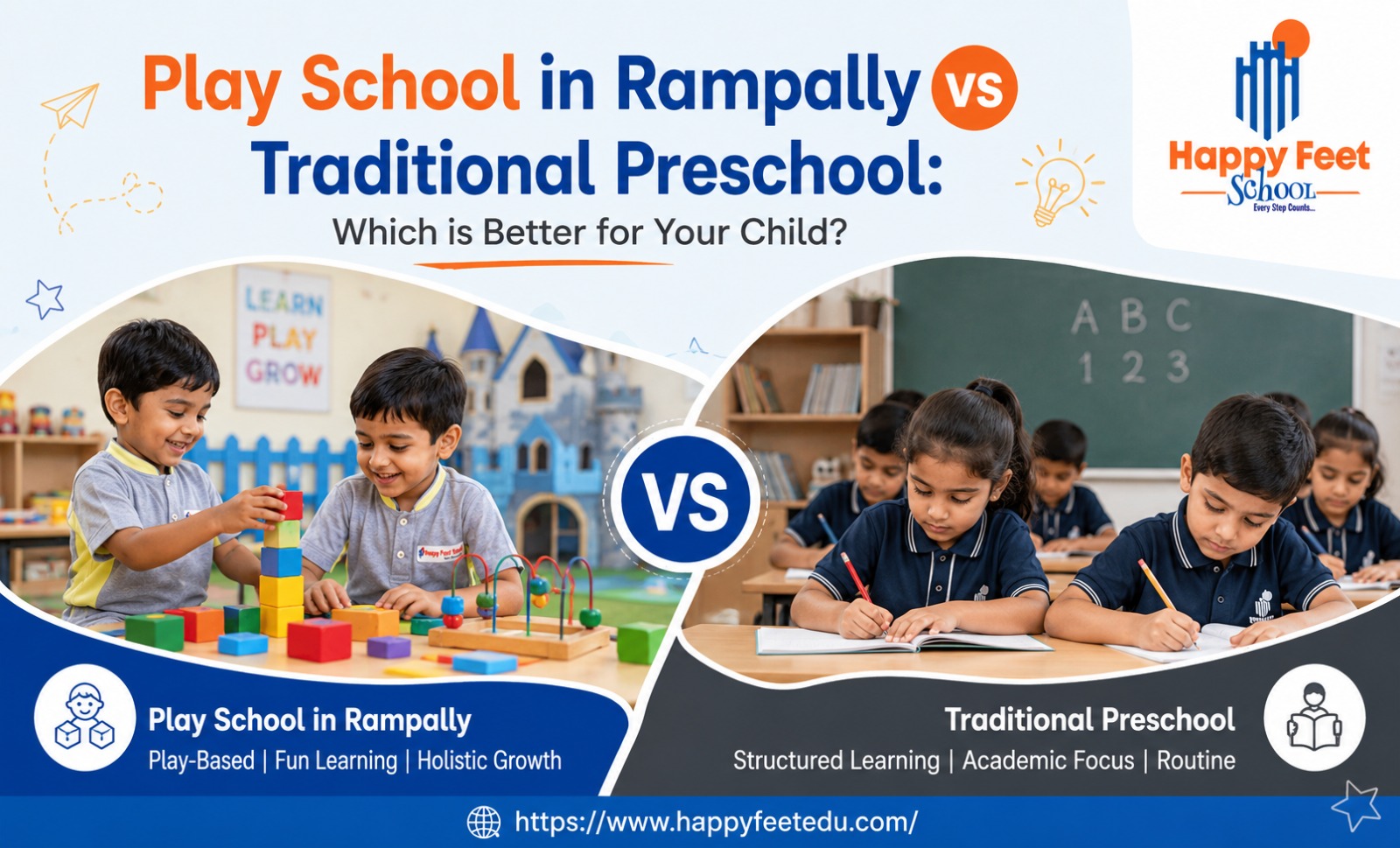
Hands-On Learning vs Passive Learning
Let’s look at the difference.
Passive Learning
-
Listening and memorizing
-
Limited interaction
-
Less engagement
Hands-On Learning
-
Doing and experiencing
-
High engagement
-
Better understanding
At Happy Feet, the focus is clearly on hands-on learning, ensuring that children are active participants in their own learning journey.
Experiential Education in Early Childhood
Experiential education means learning through real experiences.
For young children, this includes:
-
Exploring their surroundings
-
Participating in activities
-
Engaging with peers
-
Learning through play
At Happy Feet, experiential education is built into daily routines. Every activity is designed to help children learn by doing.
Why Learning Through Play Works Best
Play is not just fun. It is a powerful learning tool.
Through learning through play, children:
-
Build skills naturally
-
Stay engaged without pressure
-
Develop a positive attitude towards learning
At Happy Feet, this approach ensures that children do not see learning as a task. They see it as something they enjoy.
How Happy Feet Brings Activity-Based Learning to Life
At Happy Feet, activity-based learning is not limited to specific sessions. It is part of everything children do.
Children experience:
-
Interactive storytelling
-
Creative play
-
Group activities
-
Hands-on exploration
The environment is designed to support this approach. The castle-themed space encourages imagination, while structured routines provide stability.
Programs like Playgroup, Nursery, PP1, and PP2 at Happy Feet ensure that children gradually build skills through activities suited to their age.
This balanced approach makes learning both effective and enjoyable.
The Parent’s Role in Activity-Based Learning
Parents can support this approach at home by:
-
Encouraging play
-
Asking open-ended questions
-
Allowing children to explore
-
Avoiding unnecessary pressure
Simple activities like drawing, storytelling, or building can reinforce what children learn at Happy Feet.
Common Misconceptions About Activity-Based Learning
Some parents believe that activity-based learning is not serious enough.
But in reality:
-
It builds stronger foundations
-
It improves understanding
-
It prepares children better for future learning
The activity-based learning benefits are long-term and impactful.
Final Thoughts
The way children learn in their early years shapes how they approach education for life.
The activity-based learning benefits go beyond academics. They build confidence, creativity, communication, and curiosity.
Approaches like hands-on learning, experiential education, and learning through play ensure that children grow in a balanced and meaningful way.
At Happy Feet, this philosophy is brought to life every day. Children do not just learn. They experience, explore, and enjoy the process.
Because when learning feels natural, growth happens effortlessly.